What Is the Process to Import Dog Toys from China?

Time:2026-09-24 Author:Aria
0%

Importing dog toys from China can open access to competitive prices, varied designs, and scalable production. Yet the process demands more than finding a low-cost supplier. Buyers must evaluate materials, manufacturing consistency, packaging, shipping terms, and product safety before placing a commercial order. This guide explains how to import dog toys from China with a practical, documented approach.

The journey usually begins with product research and supplier screening. Ask for clear specifications, including toy dimensions, fabric type, stitching strength, filling materials, colorants, and packaging requirements. Request samples before discussing large quantities. A rope toy may look durable in photos but loosen after repeated pulling. Small details matter. Check the supplier’s business credentials, factory experience, quality-control procedures, and communication habits. Reliable suppliers should answer specific questions and provide realistic production timelines.

After approving a sample, confirm the purchase agreement in writing. It should cover pricing, minimum order quantity, inspection standards, defect handling, labeling, and delivery terms. Independent inspections can help verify carton counts and visible defects before shipment. You will also need accurate commercial invoices, packing lists, shipping documents, and customs information. Requirements may differ by destination, so consult qualified customs or trade professionals. Do not assume every toy is automatically acceptable because it is commonly sold online. I have found that overlooked details, such as loose threads or unclear material descriptions, can create costly delays. Careful planning reduces those surprises, though no import process is completely risk-free.
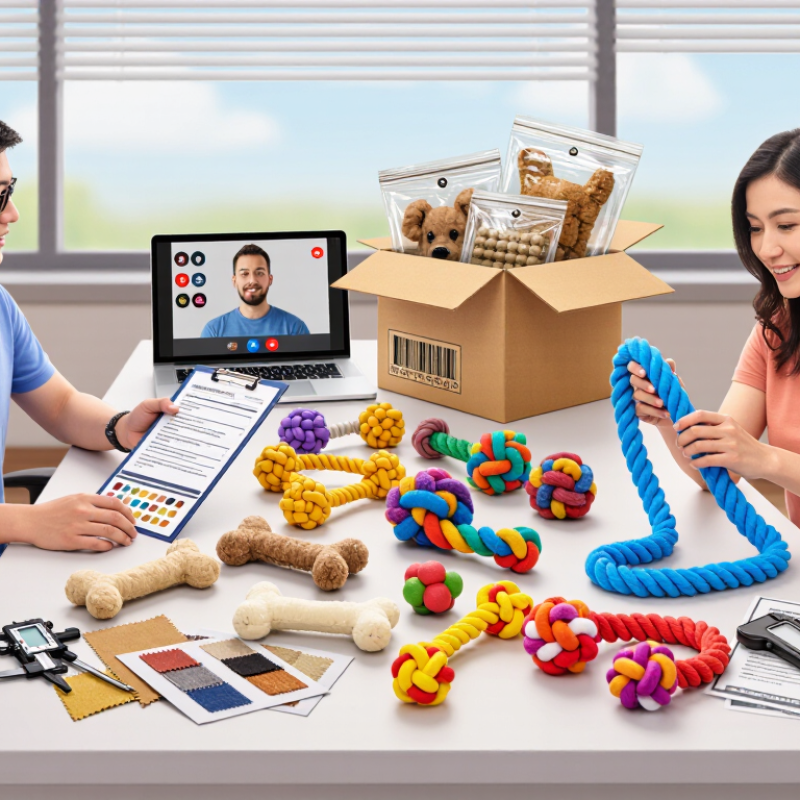
What Is the Process to Import Dog Toys from China?

Define Product Needs, Safety Standards, and Import Requirements

Before sourcing dog toys from China, define the intended dog size, chewing strength, and play style. A soft plush toy for gentle play needs different construction from a rubber chew toy. Specify dimensions, materials, stitching, colors, and packaging in writing. Request a physical sample, then check seams, edges, small parts, and odor. A polished sample can still differ from bulk production, so agree on measurable specifications.

Safety requirements depend on the product and destination market. Check current guidance from the relevant government authorities, including rules for chemical content, labeling, and product testing. Ask suppliers for recent test reports that match the exact materials and design; do not assume a report for a similar toy is enough. Confirm import documents, tariff classification, duties, and required declarations with a qualified customs professional. Requirements can change, and a small paperwork error may delay a shipment.

Tips: Test more than one sample. Small details matter. Keep written records of approved materials, test results, and inspection findings. Before shipment, consider an independent inspection against your agreed specifications. It adds cost, but discovering a loose seam after delivery is worse.

Find Reliable Chinese Dog Toy Manufacturers and Request Samples

Finding a reliable Chinese dog toy manufacturer starts with clear product requirements. Specify the toy’s size, materials, stitching, squeaker placement, and intended dog size. Ask suppliers how they inspect seams and handle material changes between production runs. A factory’s photos can look convincing, but they do not replace direct questions and documented answers. Check business details, production experience, and whether the supplier can provide relevant material and quality records. Response speed matters, but careful answers matter more.

Request samples before discussing a large order. Compare several pieces for odor, loose threads, sharp edges, weak seams, and parts that detach under reasonable hand pressure. Try the toys with dogs only under supervision; a sample review cannot guarantee every toy is suitable for every dog. Record the sample version, colors, dimensions, and agreed materials in writing. Ask whether the production unit will match the approved sample. I have seen small changes overlooked. They can matter.

Tips: Request samples from two or three suppliers and use the same checklist for each. Photograph defects beside a ruler, then send specific questions rather than vague complaints. Clarify sample costs, shipping, revision time, and who pays for another sample if materials change. Keep one approved sample for comparison during production. A neat sample is encouraging, not proof of consistent quality. Decide only after the supplier explains how repeat orders are checked.

What Is the Process to Import Dog Toys from China? - Find Reliable Chinese Dog Toy Manufacturers and Request Samples

A practical import-planning guide. Timelines and cost factors are indicative only; confirm specifications, shipping terms, customs requirements, and applicable product rules for your destination market.

Stage What to Do Information or Documents to Prepare Typical Planning Consideration Checkpoint Before Moving On
1. Define the product Choose the toy type, intended dog size, materials, dimensions, colors, packaging, and any custom features. Specify whether the product is a chew toy, plush toy, rope toy, ball, or treat-dispensing toy. Product brief, drawings or reference photos, target quantity, packaging requirements, and required warnings or instructions. Clear specifications make supplier quotations and sample comparisons more useful. Material choice and construction can affect durability, weight, and shipping cost. Confirm that the design is suitable for its intended use and that small parts, seams, cords, or other features have been considered for the target dog size.
2. Find and screen manufacturers Search supplier directories, trade-fair listings, and referrals. Ask whether the supplier manufactures dog toys directly or acts as a trading company, and compare several qualified responses. Business registration details, factory address, product range, export experience, production capabilities, and quality-control procedures. Response quality and willingness to provide verifiable details are useful screening signals, but they do not independently prove factory capability. Verify the business information independently. Request a video call or factory audit where appropriate, and check that the supplier can make the specific product you need.
3. Request a quotation Ask for pricing at multiple order quantities and clarify what is included. Compare quotations on the same product specification and delivery basis. Unit price, minimum order quantity, sample charge, tooling or setup charges, packaging cost, production lead time, and quoted Incoterm and named place. Pricing may vary with materials, customization, quantity, packaging, and shipping terms. A low unit price may exclude tooling, freight, or other costs. Confirm currency, payment schedule, quote validity, production time, and whether the quotation includes customized packaging or inspection.
4. Request and assess samples Request representative samples before placing a production order. Test fit, finish, stitching, seams, material feel, dimensions, and function against the written specification. Sample request, product specification, delivery address, sample and courier charges, and written feedback or revision notes. Sample and courier costs depend on customization, shipment origin, and destination. Allow time for revisions and repeat samples if the first version does not meet requirements. Approve a clearly identified sample and retain photos and written records. State how the approved sample relates to the final production specification.
5. Check safety and compliance Identify the rules that apply in the destination market and to the product’s materials and claims. Request relevant material declarations or test reports and assess whether independent testing is appropriate. Material composition, supplier declarations, available test reports, product labeling, warnings, and destination-market requirements. Requirements differ by country and product. Rules for children’s products should not be assumed to apply automatically to pet toys; confirm the classification with a qualified compliance professional or relevant authority. Check that documents match the exact product and materials being ordered. Do not treat a generic certificate or report as proof of compliance for every market.
6. Confirm the purchase order Issue a detailed purchase order or sales contract covering the approved product, quantity, quality criteria, packaging, inspection, delivery terms, and remedies for non-conforming goods. Purchase order, final specification, approved sample reference, agreed Incoterm, payment terms, delivery schedule, and inspection criteria. Payment structures vary. Agree milestones in writing and understand the risks, fees, and protections associated with the selected payment method. Ensure the supplier has acknowledged the final specification and that both parties agree on what counts as an acceptable finished product.
7. Monitor production and inspect Track production against the agreed schedule. Arrange a pre-shipment inspection when suitable, using documented checks for quantity, appearance, workmanship, packaging, and labeling. Production updates, inspection checklist, approved sample, order quantity, carton specifications, and inspection report if one is commissioned. Inspection timing and scope should be agreed before production is complete. Any inspection service or rework can add time and cost. Review inspection findings and resolve significant defects before authorizing shipment or paying any balance due under the agreement.
8. Arrange freight and insurance Choose air, sea, rail, or courier transport based on shipment size, urgency, and budget. Clarify who books transport and bears each cost under the agreed Incoterm. Packing list, commercial invoice, carton count and dimensions, gross and net weight, cargo-ready date, destination details, and insurance instructions. Freight rates, transit times, surcharges, and available routes change. Obtain current quotes and compare total landed cost rather than freight price alone. Confirm the named place in the Incoterm, shipment insurance arrangements, booking details, and who will handle export and import formalities.
9. Clear customs and receive goods Work with a customs broker or freight forwarder as needed. Confirm the product classification, customs value, origin information, duties, taxes, and required entry documents for the destination. Commercial invoice, packing list, transport document, origin information, product description, and any permits or supporting documents required by local authorities. Tariff classification, duty rates, taxes, and documentation depend on the product and importing country. Verify current requirements with the customs authority or a qualified broker. Check the shipment for damage and quantity on arrival, keep transaction and compliance records, and report discrepancies promptly under the agreed terms.

Verify Quality, Materials, Certifications, and Factory Capabilities

What Is the Process to Import Dog Toys from China?
Verify Quality, Materials, Certifications, and Factory Capabilities

Start with the toy’s intended use: gentle play, fetch, or supervised chewing. Ask for a sample made with the same materials and construction as the planned order. Check seams, edges, attachments, and squeakers by hand. Look for loose threads or parts that could detach. Small details matter.

Request a clear material list, including coatings, dyes, stuffing, and any plastic components. Ask the supplier to connect each material to relevant test reports. Confirm that certificates and testing apply to the exact product, not merely a similar item. Check issuing details with the testing organization where possible. Paperwork can be incomplete.

Factory capability needs more than a polished sample. Ask how incoming materials are checked, how defects are recorded, and who inspects finished toys. Review production photos or arrange an independent inspection before shipment. Confirm the factory can maintain the sample’s stitching, dimensions, and packaging across the full order. A good conversation helps, but it is not proof. Keep written specifications and approved samples for comparison. No checklist catches everything; even a careful review may miss a flaw, so leave time for corrective action.

Negotiate Pricing, Packaging, Shipping Terms, and Purchase Contracts

What Is the Process to Import Dog Toys from China?

When importing dog toys from China, price negotiation should begin with a complete product brief. Specify materials, dimensions, colors, stitching, sound mechanisms, and target quantity. A rubber toy priced at $0.80 may become $1.15 after thicker material and stronger packaging. Ask for tiered quotations. Do not chase the lowest number. Confirm whether tooling, samples, inspections, export cartons, and inner packaging are included. An experienced buyer also requests production photos and a pre-production sample before approving the order.

Packaging affects both protection and shipping cost. Describe the carton size, unit quantity, warning labels, barcode placement, and moisture protection in writing. Small toys may need individual bags, while larger toys may require cardboard sleeves. It is easy to overlook carton dimensions. That mistake can raise freight charges significantly. Review the proposed shipping term carefully, including who arranges transport, insurance, export clearance, and delivery. Request a landed-cost estimate, not only a factory price.

The purchase contract should match the approved sample and product specification sheet. Include material requirements, acceptable defect limits, production deadlines, payment stages, inspection rights, replacement procedures, and ownership of custom molds. State the selected shipping term and required documents. I would not treat a polished sample as proof of stable production. Random inspections can reveal uneven stitching, loose parts, or inconsistent color. A practical contract may feel overly detailed, but vague wording creates expensive arguments later. Keep every revision dated and signed by both parties.

Arrange Customs Clearance, Delivery, and Post-Import Quality Checks

Before shipment, match the commercial invoice and packing list against the actual cartons. Check product descriptions, quantities, carton marks, and declared values. Small mismatches can delay customs review. Keep the bill of lading and any required origin or product documents accessible, and ask a licensed customs broker to confirm the destination country’s current requirements. Rules differ, and assumptions age badly.

Once the goods are ready, confirm who handles customs entry, duties, taxes, and port charges. Request a written delivery plan showing the expected arrival date, final address, and responsibility for unloading. Track the shipment, but leave room for inspection or port congestion. A delivery window is more realistic than a single promised date. Keep copies of clearance records and payment receipts.

After arrival, inspect cartons before signing for visible damage. Then sample toys from several cartons, not just the top layer. Look for loose seams, sharp edges, missing parts, unusual odors, and differences from the approved sample. Photograph defects and record carton numbers. Set aside questionable units while you contact the supplier and agree on corrective steps. Sampling cannot reveal every problem; that limitation is easy to overlook. Keep a written inspection log for future orders.

FAQS

What should I check when assessing a dog toy sample?

Match the sample to its intended use, such as fetch or supervised chewing. Check seams, edges, attachments, and squeakers by hand. Watch for loose threads or parts that could detach.

What material information should I request?

Request a list covering materials, coatings, dyes, stuffing, and plastic components. Ask for test reports linked to the exact product. Documents can be incomplete, so verify details where possible.

How can I assess a factory’s production capability?

Ask how incoming materials and finished toys are inspected. Request production photos or arrange an independent inspection. Compare the full order with an approved sample. A polished sample alone proves little.

What details should a product quotation include?

Specify dimensions, colors, materials, stitching, sound mechanisms, and quantity. Confirm whether samples, tooling, inspections, cartons, and inner packaging are included. Request tiered pricing and a landed-cost estimate.

How can packaging choices affect shipping costs?

Carton size and unit quantities affect freight charges. Specify labels, barcode placement, and moisture protection in writing. A small oversight here can become expensive.

What should the purchase contract cover?

Match it to the approved sample and product specifications. Include defect limits, deadlines, payment stages, inspection rights, replacement procedures, and shipping responsibilities. Date and sign each revision.

What documents and arrangements matter before shipment?

Check the invoice and packing list against the cartons, quantities, and declared values. Confirm destination requirements with a licensed customs broker. Keep shipping and clearance documents accessible.

How should I inspect toys after delivery?

Check cartons for damage, then sample toys from several cartons. Look for loose seams, sharp edges, missing parts, odors, or color differences. Photograph defects and record carton numbers.

Can sampling guarantee that every toy is defect-free?

No. Sampling may miss problems. Set questionable units aside, keep an inspection log, and agree on corrective steps with the supplier.

Conclusion

Importing dog toys from China begins with clearly defining your product needs, including toy types, sizes, materials, colors, target customers, and expected order quantities. You should also identify applicable safety standards, labeling rules, testing requirements, and import regulations in your destination market. To learn how to import dog toys from China effectively, research reliable manufacturers, compare their experience and production capabilities, and request samples before placing an order. Carefully inspect the samples for durability, safe construction, suitable materials, and accurate workmanship. Confirm the factory’s certifications, quality control procedures, production capacity, and ability to meet your specifications.

After selecting a suitable supplier, negotiate pricing, minimum order quantities, packaging details, payment arrangements, shipping terms, lead times, and quality responsibilities. Record all agreements in a clear purchase contract. Before shipment, prepare accurate commercial documents and coordinate customs clearance and delivery with qualified logistics partners. Once the goods arrive, conduct post-import quality checks to confirm that the quantity, packaging, appearance, and performance match the agreed requirements. Maintaining clear communication and documented inspections can help reduce delays, unexpected costs, and product quality problems.

Aria

Aria

Aria is a dedicated marketing professional with a deep passion for innovative strategies and a keen understanding of our company's product offerings. With a wealth of experience in the industry, Aria excels at crafting engaging content that highlights the unique features and benefits of our......