Building a recognizable dog toy line requires more than printing a logo on a rubber ball. For brands asking how to customize dog toys for your brand, the process begins with the dog’s real behavior. Chewing strength, play style, size, and supervision needs should guide every decision. A small terrier may prefer a flexible squeaker. A powerful retriever may need thicker rubber and reinforced seams. The details matter.
Veterinarian and pet-health expert Dr. Marty Becker offers a practical design principle: “The best toy is one that keeps a pet mentally and physically engaged.” This idea keeps branding connected to genuine usefulness. Choose materials with clear specifications. Check odor, durability, edge softness, and cleaning instructions. Test prototypes with different breeds, not only in a showroom. A toy can look excellent and still fail quickly.
Your customization plan should also include color, shape, packaging, logo placement, and production consistency. Avoid tiny detachable parts. Review supplier testing documents carefully. Ask whether claims such as “indestructible” can be supported. They often cannot. That is worth admitting. A safer promise is usually more credible.
A strong launch may use one simple toy first, then improve it through customer feedback. Record chewing damage, washing results, and return reasons. Refine the mold when evidence demands it. Your brand becomes memorable when the toy feels thoughtful, safe, and enjoyable—not merely branded. That is the practical foundation for how to customize dog toys for your brand.
Defining your dog toy’s purpose should happen before choosing colors, materials, or packaging. A toy for gentle indoor play needs a different structure from one designed for active chewing. I have found that unclear purpose often creates weak product decisions. A toy may look appealing, yet feel awkward in a small dog’s mouth.
Study your target market through real routines. Consider dog size, age, chewing strength, living space, and owner expectations. Apartment owners may prefer quiet toys that fit beside a sofa. Outdoor users may need bright, washable designs with easy-grip surfaces. Puppies often need softer textures, while strong chewers require carefully tested durability. Comfort matters too. A heavy toy can discourage smaller dogs.
Talk with owners, trainers, groomers, and pet-care professionals before finalizing the design. Their practical feedback can reveal problems that online surveys miss. Test prototypes for seams, loose parts, odor, cleaning, and handling. Use documented materials and clear care instructions. Safety claims should match reliable testing, not hopeful wording.
My early concepts were attractive but too complicated. That was a useful failure. I now remove features that do not support the toy’s main purpose. A clear purpose makes customization more focused, measurable, and trustworthy.
How to Customize Dog Toys for Your Brand?
Choosing the right toy type is the foundation of a reliable custom product. A rubber fetch toy suits active dogs, while a soft puzzle toy supports quieter indoor play. Rope toys encourage pulling, but loose fibers may become a concern after heavy chewing. Match the size to the dog’s weight, jaw strength, and play habits. A toy should feel comfortable in the hand and remain easy to inspect.
Materials need careful selection. Natural rubber, durable nylon, and tightly woven fabric can serve different purposes. Avoid sharp edges, strong chemical odors, and coatings that may peel. Check the dye, stitching, filling, glue, and squeaker housing separately. They can fail in different ways. Request material specifications and independent laboratory reports from qualified suppliers. Testing should cover tear resistance, seam strength, small detachable parts, color transfer, and relevant chemical limits. Requirements may differ between markets, so confirm the applicable pet-product safety standards before production.
Practical sampling often reveals problems that drawings miss. A seam may look neat but open after repeated pulling. A squeaker may also sit too close to the surface. Test prototypes with controlled chewing simulations and supervised real-use observations. Record wear after washing, twisting, and biting. Some designs will need changes. That is normal. Durability should never remove every texture or movement, because dogs still need engaging play. Clear care instructions and honest size guidance help owners use the toy more safely.
| Toy Type | Recommended Use | Suitable Materials | Customization Options | Key Safety Requirements | Relative Risk Level | Suggested Quality-Control Checks |
|---|---|---|---|---|---|---|
| Chew Toy | For supervised chewing and enrichment, especially for dogs that prefer firm textures. | Natural rubber, food-contact-grade silicone, or durable nylon formulated for pet products. | Shape, hardness, texture, color, molded logo, treat cavity, and size range. | Use a suitable hardness for the target dog size; avoid sharp edges, detachable pieces, toxic coatings, and materials that splinter. | Medium | Inspect for cracks and flash; conduct bite, compression, seam, and repeated-chewing tests; verify that small components cannot detach. |
| Fetch Toy | For retrieving games on land or in water; select size according to the dog’s mouth and body size. | Solid rubber, thermoplastic elastomer, high-density foam, or tightly constructed textile materials. | Color contrast, floating design, handle shape, surface texture, reflective details, and molded or printed decoration. | Ensure the toy is large enough to reduce swallowing risk; avoid rigid shapes that may injure teeth and avoid weak throw handles or exposed cords. | Low to Medium | Test buoyancy, impact resistance, handle strength, abrasion resistance, and colorfastness after wet and dry cycles. |
| Tug Toy | For interactive play with an owner; not intended for unsupervised chewing. | Multi-layer woven fabric, braided cotton, polyester webbing, or rubber components designed for pet use. | Length, handle size, braid pattern, fabric color, woven label, and reinforced stitching. | Reinforce load-bearing seams; prevent fraying strands, loose knots, exposed metal, and detachable squeakers or clips. | Medium | Perform tensile and cyclic pulling tests, seam-strength checks, abrasion testing, and inspection after wet cleaning. |
| Plush Toy | For comfort and light play; best for dogs that do not aggressively shred fabric. | Durable polyester fabric, cotton blends, reinforced mesh, and securely enclosed polyester fiber fill. | Animal shape, fabric pattern, embroidery, squeaker placement, label, and seasonal color palette. | Prefer embroidered features over plastic eyes or buttons; secure all seams and contain stuffing and squeakers if the outer layer is damaged. | Medium to High | Check seam strength, pull resistance of every feature, stuffing retention, squeaker attachment, wash durability, and loose-thread control. |
| Puzzle or Treat-Dispensing Toy | For mental stimulation, slow feeding, and food-motivated enrichment under supervision. | Food-contact-suitable rubber, silicone, polypropylene, or durable pet-safe plastic. | Difficulty level, compartments, opening size, texture, modular parts, color coding, and portion-control design. | Openings must not trap the jaw or tongue; parts must be too large to swallow; surfaces should be easy to clean and free from inaccessible food pockets. | Medium | Test drop resistance, load-bearing performance, dishwasher or hand-wash durability as claimed, detachable-part security, and cleanability. |
| Rope Toy | For supervised tugging and interactive play; not recommended for dogs that ingest fibers. | Tightly braided cotton or synthetic fibers with reinforced ends and no exposed metal. | Braid thickness, length, handle configuration, color combination, woven branding, and end finishing. | Control loose fibers and fraying; do not use toxic dyes or easily removable knots; discontinue use when significant unraveling occurs. | Medium to High | Conduct pull, knot-slippage, abrasion, dye-transfer, and wet-dry cycle tests; inspect fiber shedding after simulated use. |
| Cooling or Water Toy | For warm-weather enrichment and supervised water play. | Food-contact-suitable silicone, solid rubber, or sealed durable plastic. | Floating shape, fill method, texture, color, water-release openings, and carrying handle. | Prevent leakage of internal gels or liquids; avoid small valves and plugs that can be swallowed; provide clear use and storage instructions. | Medium | Test leak resistance, puncture resistance, buoyancy, temperature exposure, UV aging, and closure retention. |
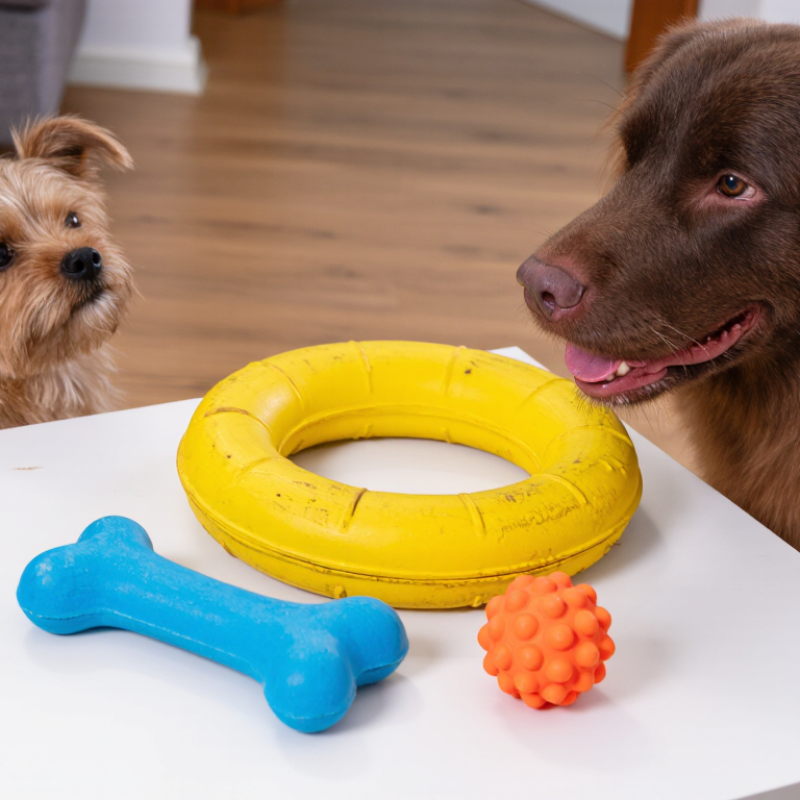
Custom dog toys should begin with a clear design story, not only a printed logo. The American Pet Products Association reported that 66% of U.S. households owned a pet in 2023. That large audience expects products to feel personal, useful, and safe. Create shapes that match the brand’s personality, such as soft bones, tug rings, or textured balls. Keep logos visible, but avoid placing them where chewing will quickly damage the print.
Color selection needs practical testing. Bright colors can improve shelf visibility, while softer tones may support premium positioning. However, colors can appear different on rubber, fabric, and recycled packaging. Request physical samples before approving production. A small mistake matters. Test logo size, contrast, stitching, and odor in real home conditions. The APPA also reported U.S. pet industry spending of 147 billion dollars in 2023, showing strong demand but intense competition.
Packaging should protect the toy and explain its value within seconds. Use clear product photography, material details, washing guidance, and suitable size information. Avoid crowded panels. Packaging research from Smithers highlights continued growth in sustainable packaging demand, so reduce unnecessary plastic where product protection allows. Recyclable paper sleeves or compact cartons can support that direction. Still, sustainability claims require evidence. A package may look responsible but perform poorly during shipping. Review drop tests, moisture resistance, and opening convenience before final production.
Custom dog toys should begin with a usable prototype, not a polished picture. Define the dog’s size, chewing style, and likely play environment before selecting materials. A soft rubber sample may suit gentle fetch, but it can fail under determined chewing. We build several versions with different wall thicknesses, seam shapes, and grip textures. Small changes matter. This stage reveals production risks early.
Quality testing should imitate real use, not a quick hand squeeze. Inspect every sample for sharp edges, loose threads, cracking, odor, and color transfer. Use controlled pull, compression, drop, and repeated bite simulations where suitable. Measure damaged pieces, because swallowed fragments create a serious pet-safety concern. Check that squeakers, ropes, and inserts remain secured after stress testing. Material suppliers should provide traceable specifications and safety documentation. Independent laboratory evaluation can add useful evidence, especially for coatings and dyes.
We also test with supervised dogs across different sizes and chewing habits. Record interest, frustration, grip, and how quickly the toy changes shape. One prototype looked excellent but became slippery after saliva and dust collected on its surface. That result forced a texture redesign. Not every failure is obvious. Review warnings, sizing guidance, cleaning instructions, and expected use before approval. Pet safety needs repeated review, because a durable toy can still be unsuitable for the wrong dog.
Custom dog toys begin with a capable manufacturer, not only an attractive sketch. Look for experience with pet products, durable materials, and clear quality procedures. Ask how the factory handles stitching, molded parts, squeakers, dyes, and packaging. Request samples before approving a production order. Inspect seams, edges, filling, and attachment points by hand. A reliable supplier should explain testing methods and provide realistic production timelines.
Share detailed specifications in writing. Include dimensions, material types, colors, logo placement, packaging, and acceptable tolerances. Confirm the minimum order quantity and every setup cost. Keep one approved sample as your production reference. My first production plan was too optimistic. A small design change delayed delivery because it required new tooling. Now, I confirm technical changes before placing the final order.
Tips: Start with a limited batch. It reduces risk and reveals customer feedback. Use a simple inspection checklist for every shipment. Check color consistency, stitching strength, odor, labeling, and package damage. Do not rely on photographs alone. Arrange independent testing when safety performance is uncertain. Keep communication records, inspection reports, and revised drawings in one shared file. A cheaper quote can become expensive after rework, delays, or rejected goods. Leave time for corrections. Manufacturing rarely follows the first schedule perfectly.
Start with a clear design story, not just a printed logo. Soft bones, tug rings, and textured balls create different play experiences. Make it useful.
Place the logo on a visible, durable area. Avoid high-chew zones where printing may fade quickly. Test size, contrast, and placement on a physical sample.
Bright colors can improve shelf visibility. Softer tones may create a more premium appearance. Colors can change across rubber, fabric, and paper. Do not trust screens alone.
Packaging should show the product clearly within seconds. Include material details, washing guidance, suitable size, and clear product photography. Crowded panels make important information harder to find.
Reduce unnecessary plastic when protection remains strong. Paper sleeves or compact cartons may work well. Test drop resistance, moisture protection, and opening convenience. A green-looking package can still fail during shipping.
Ask about experience with pet products and durable materials. Review procedures for stitching, molded parts, squeakers, dyes, and packaging. Request samples before placing a production order. Inspect seams and attachment points by hand.
Record dimensions, materials, colors, logo placement, packaging, and acceptable tolerances. Confirm minimum order quantities and setup costs in writing. Keep one approved sample as the production reference. Small changes can require new tooling.
Begin with a limited batch. It limits financial risk and reveals customer feedback early. Use a checklist for color, stitching, odor, labels, and package damage. Photographs are not enough.
Keep messages, inspection reports, approved samples, and revised drawings together. Leave time for corrections because schedules often change. My early timeline was too optimistic. That mistake was avoidable.
Learning how to customize dog toys for your brand starts with defining a clear purpose and understanding your target market. Decide whether the toys should support chewing, fetching, training, comfort, or interactive play, then choose suitable shapes, materials, sizes, and safety standards for the intended dogs. Consider durability, non-toxic construction, easy cleaning, and designs that reduce potential hazards. These decisions create a strong foundation for a practical and appealing product line.
Next, develop original designs that reflect your brand identity through colors, logos, patterns, and packaging. Work with a manufacturer to create prototypes and carefully evaluate their function, durability, stitching, materials, and overall pet safety. Gather feedback, make necessary improvements, and confirm that the final specifications are consistent. Once the product passes quality checks, establish clear production requirements, timelines, inspections, and packaging details to help ensure reliable custom dog toys from the first order onward.

Pitbull Toy