Choosing pet toy suppliers is not just a price comparison. The right partner can help a retailer keep shelves stocked, offer products for different play styles, and answer customer questions with confidence. So, what should retailers consider when selecting pet toy suppliers? Start with product safety information, material details, size options, durability claims, and clear guidance on suitable pets. Ask for samples. A squeaky toy may look sturdy in a catalogue, but its seams and stitching tell a more useful story in your hands.
Veterinarian and pet-care author Dr. Marty Becker often emphasizes matching products to an individual pet’s needs. A practical way to apply that principle is: “Choose toys for the animal in front of you, not just the trend on the shelf.” This is a sourcing lens, not a substitute for documented product testing or supplier records. Retailers should also review minimum order quantities, lead times, packaging, replacement policies, and how quickly a supplier responds when details are missing. Small signals matter. A vague answer about materials deserves a follow-up.
This guide explores how to compare suppliers, assess product ranges, and build a reliable purchasing process. It also considers the less glamorous parts, such as inconsistent stock and toys that do not sell as expected. No supplier is perfect. Retailers may need to test a small order, review customer feedback, and adjust their choices over time. A careful start beats a crowded storeroom.
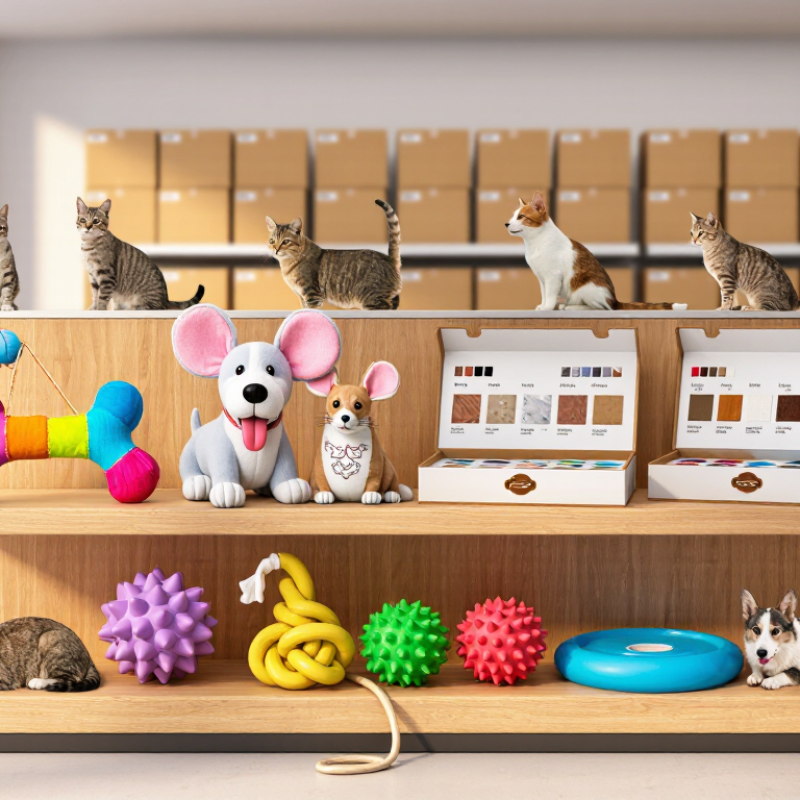
Before comparing pet toy suppliers, define what your store can sell well. Look at your customers, shelf space, and usual price range. A neighborhood shop near a dog park may need durable fetch toys and chew options. A small urban store might favor compact puzzle toys and washable plush items. Start with your shelf. Then compare categories by pet size, play style, and owner priorities. Check product dimensions, material details, care instructions, and available safety documentation. These details help staff answer practical questions and reduce mismatched purchases.
Tips: Review recent sales by category, not just total toy sales. Ask staff which items customers handle but leave behind. Set a realistic opening order for each category, and leave room to adjust. My own planning can lean too heavily on popular items; a small trial order often reveals gaps.
Write down the role each category should play: everyday value, interactive play, or a higher-priced gift. Avoid stocking many toys that solve the same need. A mix of textures, sizes, and play types gives shoppers clearer choices. Consider storage, too; bulky toys can take more display space than expected. Revisit the range after a few weeks, using sales and customer comments. Some choices will miss. That is useful information, not a reason to keep reordering by habit.
Choosing the Best Pet Toy Suppliers for Retail
A supplier’s catalog should serve different pets, not just different colors. Check whether it offers toys for varied sizes, play styles, and chewing strengths, with clear dimensions and care instructions. The American Pet Products Association’s 2024 State of the Industry report estimated U.S. pet-industry spending at $147 billion in 2023. That figure covers the wider industry, not toys alone, but it signals a large market where dependable product details matter. Fit matters.
Ask suppliers to identify materials by component: fabric, filling, coating, and any attached parts. Request current, product-specific test documentation and ask which hazards were assessed, such as restricted chemicals, small-part separation, or seam failure. Confirm that reports match the item and production batch you plan to order. A “non-toxic” claim without supporting detail is not enough. No test reproduces every dog’s chewing habits, either; that limitation deserves honest discussion.
Tips: Order samples from the intended production run. Tug seams, inspect edges, and check whether squeakers or stuffing become accessible after ordinary play. Keep written records of test reports, batch numbers, and supplier responses. If details are vague, pause before placing a large order.
| Assessment Area | What to Review | Strong Supplier Evidence | Retailer Verification |
|---|---|---|---|
| Product range | Coverage across chew, fetch, tug, puzzle, plush, and interactive toys, with options for different animal sizes and play styles. | A current catalog with product dimensions, intended use, care instructions, and clear descriptions of each toy’s construction. | Check that the range fits your customer base and that product information is consistent across catalogues, samples, and packaging. |
| Size and suitability guidance | Whether products identify suitable pet sizes or provide measurements that help shoppers assess fit. | Specific dimensions and practical supervision guidance where appropriate; no unsupported claim that a toy is indestructible. | Compare labels and product listings with the physical sample. Avoid relying on a size label without checking the toy’s actual dimensions. |
| Material disclosure | Materials used in each component, including coatings, dyes, adhesives, fillings, and attached accessories. | Product-specific material specifications and supplier declarations that identify components rather than using vague terms such as “non-toxic.” | Request documentation for the exact product and version. Check that material details match the sample and packaging. |
| Material suitability | How the material and construction suit the toy’s intended use, such as chewing, fetching, or supervised play. | Clear use instructions and design details, such as secure seams, smooth edges, and appropriately attached components. | Inspect samples for loose parts, sharp edges, weak seams, exposed fillings, and components that could detach during normal use. |
| Mechanical and physical safety | Potential hazards such as choking-sized pieces, breakage, sharp fragments, entanglement, or accessible squeakers and fillings. | Risk assessment and test records relevant to the product’s design and intended use, supported by documented corrective actions when issues are found. | Review test scope and sample identification. Conduct your own sample inspection; a report for a different design or product may not be relevant. |
| Chemical compliance | Whether substances in materials and coatings meet applicable requirements in the markets where the product will be sold. | Current, product-specific test reports or compliance documentation that identify the tested materials, methods, and applicable requirements. | Confirm destination-market requirements with qualified compliance support. For EU sales, assess applicable REACH restrictions for the product and its materials. |
| Testing and laboratory evidence | Who performed the testing, what was tested, and whether the testing covers the relevant product risks and materials. | Reports tied to the product or material specification, with test dates, methods, results, and laboratory details. ISO/IEC 17025 accreditation can indicate a laboratory’s testing competence within its accredited scope. | Check the report’s scope and accreditation details directly. Laboratory accreditation is not, by itself, product certification. |
| Batch traceability | Whether products can be traced to production batches and associated material or quality records. | Lot or batch identification, production records, and a documented process for investigating quality concerns. | Ask the supplier to demonstrate how a retail unit can be linked to its production batch and supporting records. |
| Quality consistency | Controls for repeat orders, including inspection criteria and handling of defects or product changes. | Written quality procedures, defined acceptance criteria, and notification of changes to materials, construction, or manufacturing location. | Compare pre-production samples with delivered goods and agree how changes and nonconforming products will be managed. |
| Packaging and instructions | Whether packaging communicates intended use, supervision advice, care information, and any relevant warnings. | Accurate, readable instructions that match the product and applicable market requirements, without unsubstantiated safety claims. | Review final artwork for each sales market and check that warnings do not conflict with the product’s design or intended use. |
Important: Requirements vary by product and destination market. Standards written for children’s toys should not automatically be treated as pet-toy certifications; confirm which regulations and tests apply to the specific product and its intended use.
A reliable pet toy supplier should be able to explain how each product is made and checked. Ask for material specifications, inspection records, and test reports tied to the exact toy model—not a similar item. Paperwork matters. Compare report dates and product details with the sample in your hand. A report that names a different material or size needs clarification.
Requirements vary by market and product type, so confirm which safety rules apply to your sales locations. Request evidence that the supplier has assessed relevant hazards, such as loose parts, sharp edges, or coatings that may wear during play. Check the details. Verify that labels, age guidance, and warnings match the product and destination. When reports come from an outside laboratory, confirm the laboratory and report directly where practical.
Quality checks should continue after approval. Ask how the factory monitors production changes and tracks batches, and what it does when a defect appears. Small gaps matter. Compare a pre-production sample with goods from a later run, especially at seams, joints, and attachment points. Even a tidy certificate folder can miss a real-world problem; I would not treat documents as a substitute for inspecting the toy itself. If answers are vague, request specific records before placing a large order.
Suggested evidence checklist by verification area. Bar values count the evidence types listed; they are not supplier ratings or industry statistics.
Ask for quality-control records, relevant product test reports, and traceability documents. Applicable regulations and documentation vary by product and sales market; verify requirements for your specific products and destination countries.
When comparing pet toy suppliers, look beyond the quoted price per item. Ask for a tiered price list and note what changes at each volume. A toy priced at $2.40 may seem cheaper than one at $2.65, but freight, packaging, and sample fees can shift the real cost. Calculate the landed cost per sellable unit, including any charges for custom labels or carton preparation. Keep the assumptions in writing.
Minimum order quantities affect both cash flow and storage space. A 500-piece minimum may work for a proven rope toy, but it can leave a new puzzle toy sitting in cartons for months. Check whether the minimum applies per design, color, or total order. Ask if a mixed assortment is possible. Retail forecasts are rarely perfect, and even careful buyers misjudge seasonal demand. Small details matter.
Delivery capability needs the same scrutiny as price. Request typical production and transit times, then ask how delays are communicated. Confirm carton dimensions, packing counts, and whether the supplier can split shipments across agreed dates. A low quote is less useful if late stock misses a planned shelf reset. Track sample approval, order confirmation, and dispatch dates in one simple sheet; it is easy to overlook a step when several toy styles are moving at once.
A supplier’s response to a sample request can reveal more than a polished product sheet. Ask for samples made with the materials and construction planned for production, then inspect them under ordinary handling. Gently test the seams, check attached parts, and note sharp edges, loose threads, or strong odors. Small details matter. Photograph each sample beside a ruler, and record its weight, dimensions, packaging, and delivery time. These notes make comparisons less dependent on memory. A sample can look excellent while telling you little about batch consistency; that gap deserves attention.
Before committing, place a modest trial order with clear written specifications. Include color, size tolerance, labeling, carton count, and acceptable defect limits. Compare the delivered goods with the approved sample, and inspect units from different cartons. Look for variation in stitching, filling, squeakers, and packaging damage. Ask how the supplier handles shortages or defects, and notice whether answers are specific and timely. Keep the exchange factual. A trial order cannot predict every future problem, and a small order may receive extra care. That is worth remembering. Compare quoted lead times with actual dispatch and arrival dates, then save photos and notes for later orders. If a supplier resists reasonable checks, pause before scaling up.
It should cover different pet sizes, play styles, and chewing strengths. Clear dimensions and care instructions help. Fit matters.
Ask for details on fabric, filling, coatings, and attached parts. Product-specific test records are more useful than a general safety claim.
Inspect seams, edges, and attachments. Gently tug the stitching and check whether stuffing or squeakers become reachable during ordinary play. Take photos.
Match the report to the exact toy model, materials, and production batch. If a size or material differs, ask for clarification.
Compare an approved sample with items from later production. Check stitching, joints, and attachment points across several cartons. Small gaps matter.
Write down color, size tolerance, labeling, carton count, and acceptable defect limits. Clear records reduce guesswork later.
Ask how shortages and defects are handled. Specific, timely answers are reassuring; vague replies deserve another question.
No. A small order may receive extra care, and future batches can vary. Keep inspecting—and be willing to question your own assumptions.
Choosing the right pet toy supplier starts with a clear understanding of your store’s customers, budget, and preferred product categories, such as chew toys, interactive toys, or comfort toys. Consider what should retailers consider when selecting pet toy suppliers: whether a supplier offers a suitable range, uses durable and pet-appropriate materials, and can provide clear information about product safety and quality controls. Check that manufacturing practices and relevant documentation support your business’s compliance needs, and compare prices alongside minimum order quantities, lead times, and shipping options.
Before committing to a large order, request samples to assess construction, usability, and finish firsthand. A small trial order can also reveal how reliably the supplier handles communication, packing, delivery, and problem resolution. Weigh these practical factors together rather than choosing on price alone. A supplier that combines consistent quality, dependable fulfillment, responsive support, and products suited to your customers can help your retail business build a trustworthy and sustainable pet toy assortment.

Pitbull Toy